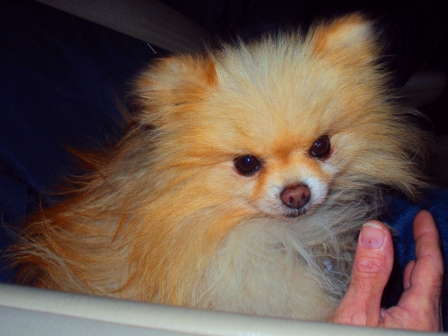
PANTING, WHINING, BARKING, NOT SETTLING DOWN… if the experience of going for a drive in the car with your dog has become stressful for you and your dog it’s time to address the situation. Left as is, neither you nor your dog can relax, normalize and enjoy the time spent together.
To cure the behaviour you must address and correct the root cause – this is a psychological issue – your dog’s and yours. Rescue remedies may help but they are unlikely to cure the behaviour.
FIRST LET’S TALK ABOUT HOW THIS BEHAVIOUR DEVELOPS
Here are a few examples of how we de-normalize the situation for our dogs and create the behaviour problem…
One – If you make a fuss when you are about to go out to the car, you ‘wind’ your dog-up and teach your dog that leaving and going out in the car is associated with excitement… i.e. ‘hey boy, you want to go for a ride in the car!’ by creating intense excitement you are destabilizing your dog’s state of being. You are overwhelming and flooding their senses. You are telling your dog to be excited, you are enabling an altered state. For an insecure dog this can trigger anxiety and anxiousness.
Two - If, in the past you or your dog has experienced a traumatic incident in the car and you still carry some of that stress from your traumatic experience your dog can sense your disquiet, nervousness, upset.
Three – You may have been upset or very excited when you first brought your dog home in the car.
Four – Your dog has motion sickness. When your dog gets sick in the car you get worried, frustrated, angry or otherwise stressed. For guidance on curing motion sickness in your dog you can read this article.
Now let’s talk about curing this behaviour
STEP ONE – CHANGE YOUR OWN BEHAVIOUR
I usually spend the first 30 minutes to 60 minutes of a four hour session just dealing with the human’s issues – which trigger the dog’s issues. When we humans start to accumulate nervousness pertaining to our dogs in certain situations (i.e. Our dog going up to another dog) we teach them to associate that situation with tension, nervousness, fear, insecurity, excitement…this is why dogs become reactive. Our dogs read our body language as our thoughts translate directly and instantaneously to our bodies. The second you feel tension, your body shows it…compression of your lips, tension around your eyes, your shoulders – your dog knows how you feel before you are aware of how you feel! You must relax and normalize so your dog can too.
To understand more about how you can inadvertently communicate the wrong message to your dog and to understand more about how to communicate the right message you can read these articles…
Because dogs live in the moment it is easier to change a dog’s ‘bad habits’ than it is a human’s. Humans carry grudges, dogs do not. Dogs form associations with places, things, animate and inanimate objects. Dogs are very forgiving and treat each day, each experience as a new beginning. It is only with difficulty that we are able to convince, permit and allow ourselves to do the same.
Make the future different than the past. You must let the past go – must not anticipate that the past will and must repeat itself – let it go from your mind. Envision a new future in which you forget about what has happened before and focus instead on what you would like to happen – a nice peaceful ride in the car with your dog.
When you change your thoughts from negative to positive you relax – this allows your dog to do the same. You are leading by the right example.
STEP TWO – SET THE FRAMEWORK AND GET READY TO GO OUT
You then have to set the framework for the car ride before you get into the car! How you go out of the house with your dog matters! You must have control of your own state of being and your dog at every step of the way. This sets the framework for good behaviour in the car.
Â
A – When you want your dog to go to the front door to get ready to go, call your dog over in a calm, confident manner. Don’t wind your dog-up. Don’t say, ‘we’re going out’ or ‘do you want to go for a ride’ – you do not need to say anything at all – your dog already knows. Don’t engage your emotions, just be matter of fact – remember this should be a normal event.
B- Your dog needs to be, calm and quiet before you walk out the door, if you are attaching a leash to go out to the car your dog needs to be calm and quite before you attach the leash to your dog’s collar.
C – When you are ready to approach the door, stand-up straight – your posture should be upright, confident, not tense – be aware of your shoulders, arms and how you hold the leash in your hands. If you are gripping the leash with tension, if your arms and shoulders are stiff with apprehension and tension you are giving your dog a message – you are communicating that you are not in control of yourself and therefore you cannot be in a leadership position with your dog. You are enabling stress, anxiety, insecurity in your dog.
D – Your dog is behind you before you open the door;
E – Your dog is to stay behind you as you walk out the door (and down the steps);
F – Your dog is either behind or beside you to the garage or across the lawn (pathway) and out to the sidewalk and to the car.
If you or your dog is not calm – stop.
I see so many people keep moving forward when their dog is not calm, when they (the person) are not calm. Stop, get your dog calm and then continue moving. If your dog is reacting and you keep walking you are telling your dog it’s ok to behave as you are. Stop regain control and then move forward.
It matters 100% what state you and your dog is in before you get into the car!
Don’t engage in an argument with your dog and don’t whine! Don’t say to your dog ‘ oh, I wish you wouldn’t do that’…to do so is whining and complaining, not directing – provide leadership, coach and mentor your dog. If you expect trouble you will get trouble…your dog can feel if you are anticipating an argument, instead remember to think i direct, my dog listens and that is it! Be 100% committed – your dog knows when you are not. Your dog knows when he has an edge to manipulate and control. Be fair, but be determined.
Tugging and pulling, yelling – it’s all an argument. This is a psychological test of wills – make sure your will is greater and comes from a place of confidence and strength of commitment.
Remember your dog has probably been doing this for awhile (as have you!), so have patience and persistence. Adjust your expectations too. When we are tired or stressed we don’t have the same focus, patience and control as we do when we are relaxed and refreshed. Some days are better than others – never give-up hope. Persist…change can take a little time. It takes time to train yourself to lead, communicate and direct effectively and we all have good days and bad days!
If your dog starts to get excited you must be the polar opposite – calm and directive. Don’t get sucked into the vortex of your dog’s emotion, disengage your emotions engage your working mind.
And remember if you need to disagree with any excited behaviour…
One – Make sure you are calm (without excess emotion) and ready to coach with fair, firm confidence. Don’t be aggressive; don’t raise your voice in anger.
Two – Lead…addressing from a distance is not leadership! Calmly but with assurance go over to your dog. If you need to move a distance – fine, move quickly, deliberately, confidently – not panicked or excited! Don’t match your dog’s state, if you do so, you lead by the wrong example.
Three – get your dog’s attention, you can touch your dog firmly but quickly with your fingers – at its neck or waist, you can snap your fingers and say ‘hey’ or ‘shh’ firmly, but not with anger. Never touch or talk in anger as you then lead by the wrong example!
Four – tell your dog what you want i.e. ‘shh’
Five – tell your dog what you would like it to do instead i.e. ‘Relax or ‘calm’’ etc.
Six – what until they are calm to move forward.
STEP THREE – GETTING INTO THE CAR
One – when you stand beside the car your dog must be calm;
Two – when you open the car door, your dog must be calm;
Three – you must wait until your dog is calm before you invite your dog into the car. When your dog is calm invite it to get into the car…or if the dog is small, you can then pick your dog up and put it in the car;
Four – if your dog runs about in the car you should get it a harness and seat belt tether…or crate your dog. Your dog must learn that it cannot pace or dash about in the car.
Five – as long as your dog has gotten into the car in a relaxed state and you remain positive and relaxed in the car you should see your dog’s behaviour start to change, become more relaxed.
Six – you can also use rescue remedies or flower essences in combination with the methodology above.
Lastly, be patient and persistent,many people give-in and give-up too soon.Â
Your ability to affect change in your dog is dependent on your leadership skillsand your awareness of how you and communicate. As your skill grows, your ability to affect change will too!Â

â€áµ”ᴥᵔâ€
Related Articles
For related and additional articles on dog and cat, care, health, training, nutrition and animal advocacy go to thispage.
Feel free to leave a comment below – if your comment is polite, informative etc. I will publish it. If your comment is a quick question, I will answer it if time permits…
If you require additional assistancewith your dogs you can engage me to…
1.0) Do an in-person session(see details below)
2.0)Â Do a phone/email consultation (see details below)
1.0) In-Person Sessions are available to you if you live in the region of Ottawa-Gatineau, the Ottawa Valley and Region.
(i.e. Ottawa, Hull, Alymer, Orleans, Bells Corners, Manotick, Vars, Kanata, Stittsville, Smith Falls, Fitzroy, Carp, Arnprior, Renfrew, etc.)Â
 and surrounding areasÂ
(i.e. Brockville, Smith Falls, Perth, Kingston, L’Original, Val-des-Monte, St-Pierre-de-Wakefield, etc.)
or if you will be visiting the area from out-of-town.
Methods of Payment (for In-Person Sessions):
Cash, Email Money Transfer and Credit Card via PayPal
2.0) If you reside elsewhere you can engage my world wide consultation service, details of which are provided just below…
My Hourly Fee
$ 100.00/hour in Canadian funds.
Purchasing Consultation Time:
Client’s often start out by purchasing an hour of my time and then augment that if required to suit the situation;
Or you can – if your situation requires it, purchase whatever block of time you want (i.e. multiple hours).
Methods of Payment:
Email Money Transfer and Credit Card via PayPal
1.0 Email Money Transfer:
1 hour = $ 100.00 in Canadian Funds;
For payment via email money transfer I provide you with a password (security information).
2.0 Credit Card via PayPal
1 hour = $ 100.00 + $ 5.00 PayPal Transaction fee = $ 105.00 Canadian Funds;
For payment via PayPal I send you a PayPal invoice to enable payment.
Method of Consultation – Canada, USA and Abroad (i.e. UK, Asia, etc.)
If You Are Located In:
1.0 Canada:
I can work with you via:
Phone with follow-up by email, or;
Via email only;
The choice is yours;
If you want to work via phone you provide me with your phone number and I will call you at the mutually agreed upon Consultation time.
2.0 USA:
I can work with you via:
Phone with follow-up by email, or;
Via email only;
The choice is yours;
If you want to work via phone:
You call me at the following number 613-622-7958, at the mutually agreed upon consultation time.
3.0 ALL OTHER GLOBAL LOCATIONS (i.e. UK. Asia, etc.):
I can work with you via:
Via email only, or;
Phone with follow-up by email…
The choice is yours;
If you want to work via phone:
You call me at the following number 613-622-7958, at the mutually agreed upon consultation time.
To Set-up a Consultation
Step 1 – Identify how you would prefer to pay for the consultation;
 Payment options as noted above are:
o   email money transfer, or;
o   Credit card via Paypal.
Step 2 – Identification of a consultation time that works for both our schedules;
Step 3 – You then pay the fee for the amount of consultation time you want to purchase;
Step 4 – Consultation takes place on the agreed upon time.
Contact me at
Office 613-622-7958
Cell 613-293-3707
Ottawa Valley Dog Whisperer Services
Training;
Behaviour Modification;
Rehabilitation;
Nutrition;
Health
Whether you are experiencing dog behavior problems and would like assistance, or just want to bring your dog up to be a well-balanced canine -Â I offer both a local and international service for people with one or multiple dogs.Â
I work with all breeds – from small (i.e. Yorkie, Pomeranian, Chihuahua, etc.), medium breeds size (including Pit Bulls) and large breed dogs…
International e-ConsultationÂ
Contact me at
Office 613-622-7958
Cell 613-293-3707
Notes:
Please note – this article is for information purposes and is not a substitute for an in-person Session with me. When working with dogs I use many techniques – it is important to note that this article may touch on one or several techniques but not all. I select the technique that I use for a particular dog based on my observations of the dog and an intuitive, instinctive assessment of that dog’s and its human’s individual requirements. For example when I am working with a dog that is hyper sensitive and very physically reactive I will not use voice or touch. I use a lot of therapeutic touch on some dogs, others require the use of herding techniques and so on. Each and every technique must be combined with:
- an understanding of the real intelligence, sensitivity and capability of dogs;
- an understanding of how to read a dog’s face and a dog’s overall body language;
- an understanding of the full spectrum of ways that humans communicate and dogs communicate;Â
- understanding and recognition of the individual that is each dog – no two dogs are the same…taking a ‘cookie cutter’ approach to techniques is not the way to work with a dog;
- a complete recognition and understanding of all the elements that feed a behaviour and create an issue:
- Â the vast majority of people can only identify one or two elements…which vastly inhibits the ability to resolve behavior issues;
- behaviours do not exist in isolation – there are always many elements that feed a single behaviour, there all always multiple behaviours that create a behavioral issue;
- self-restraint and discipline on the part of the human who is directing the dog;
- sensitivity, awareness, intuition, instinct and timing on the part of the human who is directing the dog;
- to understand, connect with and adapt quickly and effectively to a dog’s learning requirements you must be able to employ the same tools a dog uses – acute sensitivity, awareness, instinct, intuition and timing;
- kindness, endurance, consideration, patience, persistence, perspective, the ability and know how to let the past go, the ability to set realistic expectations at any one point in time;
- the creation of structure, rules, boundaries and limitations for each situation at the macro and micro level;
- understanding of all the elements that make up an instruction and direction to a dog…there are multiple steps involved in an instruction – not just one!
- absolute honesty – if you cannot be honest with yourself you will not be able to communicate clearly with a dog.
These are just some of the techniques that I teach my clients – it is a holistic, all-encompassing approach. If you are missing any one element of the above mentioned your success rate will be affected to one degree or another in implementing the techniques offered in the article presented above.